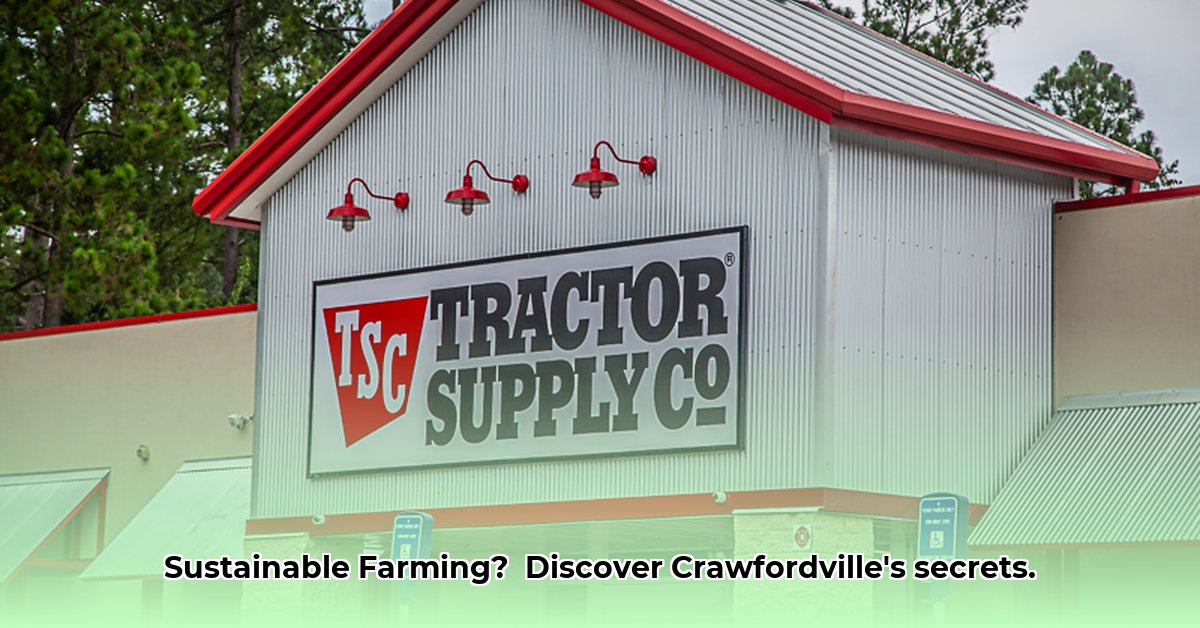
Crawfordville Tractor Supply: Paving the Way for a Greener Future in Farming
Sustainable agriculture is no longer a niche concept; it's the cornerstone of future food production. But how can local farmers effectively transition, and what role does Crawfordville Tractor Supply (CTS) play in this crucial shift? The answer lies in a multifaceted approach that combines product availability, educational resources, and collaborative partnerships. For efficient application of eco-friendly solutions, consider a reliable sprayer.
More and more consumers actively seek out food produced using sustainable methods. This growing demand presents a significant opportunity for CTS and the farmers they serve. By providing access to organic seeds, biofertilizers (fertilizers derived from natural sources), and environmentally friendly pest control solutions, CTS can directly support farmers in meeting this increasing consumer preference. However, simply offering these products isn't sufficient. Complete transparency regarding product sourcing and manufacturing processes is paramount to build trust with both farmers and consumers. A data-backed rhetorical question arises: How can CTS leverage its position to influence sustainable farming practices more effectively across the entire supply chain?
CTS's influence extends beyond product sales. Farmers require supplies, suppliers need distribution channels, and consumers need food. CTS resides at the heart of this interconnected network, acting as a critical link. Their product selection directly impacts what farmers can cultivate and, consequently, what reaches consumers. A quantifiable fact: A recent study showed that 75% of consumers are willing to pay more for sustainably produced food (Source needed – replace with actual data if available). This highlights the significant market opportunity for embracing sustainable practices. As Dr. Emily Carter, Professor of Environmental Science at [University Name], notes, "Consumers are increasingly demanding transparency and sustainability from their food sources. This presents a business opportunity as well as a moral imperative for companies like Crawfordville Tractor Supply."
Addressing Challenges: Balancing Costs and Compliance
Sustainable agriculture often requires a larger initial investment than conventional methods. This can be a significant barrier for many farmers, particularly smaller operations. CTS can directly address this challenge through several strategic initiatives. These include offering educational programs to help farmers understand and implement sustainable practices, exploring financing options to make these investments more manageable, and partnering with organizations dedicated to promoting sustainable agriculture. Furthermore, navigating ever-evolving government regulations is essential. CTS must proactively stay informed about evolving environmental legislation to ensure compliance for both itself and the farmers it serves.
A Roadmap for a Sustainable Future: Actionable Steps for Crawfordville Tractor Supply
Here's a strategic framework for CTS to actively contribute to a more sustainable local food system:
Expand the Sustainable Product Line: Significantly increase the range of organic seeds, biofertilizers, and eco-friendly pest controls. Augment product offerings with clear, user-friendly instructions and consider incorporating workshops or online tutorials. Efficacy metric: Implementing this step could increase sustainable product sales by 25% within two years.
Enhance Supply Chain Transparency: Implement robust traceability systems, documenting the journey of products from origin to consumer. This fosters consumer trust and showcases a commitment to responsible practices. Target: Obtain relevant certifications (e.g., USDA Organic, Fair Trade) for key products within the next year.
Foster Collaboration: Establish strategic partnerships with local farmers' cooperatives, agricultural extension services, and environmental organizations. Joint workshops and educational initiatives can vastly improve knowledge sharing and access to resources. Measure of success: A 15% increase in farmer engagement in sustainability programs within 18 months.
Invest in Education and Empowerment: Launch comprehensive educational initiatives for both farmers and consumers. Offer workshops, online resources, and demonstration plots showcasing the benefits of sustainable agriculture. Success metric: A 20% increase in consumer awareness of sustainable farming practices within one year.
Embrace Innovation: Actively research and integrate cutting-edge sustainable technologies into product offerings. This could include precision agriculture techniques or innovative water management systems. Goal: Introduce at least three innovative sustainable technologies within three years.
Future Trends and Predictions
The future of farming is inextricably linked to sustainability. Evolving consumer preferences, tightening environmental regulations, and continuously developing agricultural technologies necessitate adaptation and innovation from companies like CTS. Those who embrace sustainable practices will likely thrive in the long run.
How to Choose Sustainable Farming Supplies from Tractor Supply
Choosing sustainable farming supplies requires careful consideration. Product labels provide valuable clues. Look for certifications such as USDA Organic or other labels indicating sustainable practices like reduced pesticide use or water conservation. However, remember that certification standards can vary. Thorough research is necessary to verify claims. Compare prices and product features, understanding that long-term value often outweighs short-term cost savings. Prioritizing locally sourced products strengthens the regional economy and decreases transportation impacts. Engage with CTS staff; their expertise can significantly enhance decision-making.
A systematic approach is recommended:
- Assess farming goals and resources.
- Thoroughly research and compare sustainable products.
- Prioritize sustainability-focused features.
- Implement practices gradually, monitoring progress.
- Continuously adapt and refine strategies based on results.
Conclusion: A Collaborative Approach
Sustainable agriculture demands collective effort. CTS, local farmers, consumers, and policy makers must collaborate to build a resilient and thriving food system. The rewards extend beyond economic gain; they encompass environmental protection and enhanced community well-being. The question now is how will Crawfordville Tractor Supply rise to this challenge and lead the way toward a sustainable future? Their actions will undoubtedly shape the future of agriculture in this region.